Showing posts with label Black and White. Show all posts

Thursday, 11 January 2018

The case of the black and white image

Monochrome or Black and White photos have been in existence ever since photography was invented. It was easiest to formulate an emulsion that displays an image in shades of grey in the beginning. Colour came substantially later because the mechanism to sense and render colour images is quite a bit more complex.

But in these days of the digital mobile phone, our scientists and engineers have already overcome the difficulties and easily render colour. Except for the odd camera (the Leica Type 246 Monochrom), the digital sensor is invariably a colour mosaiced sensor.

I once encountered someone on G+ who wondered whether there would be any need to make black and white images at all. In the ensuing discussion, I highlighted the ideas that the removal of colour from the image allowed shapes and texture to be presented.

Another angle that modern photographers encounter is that the capture of the image in raw and subsequent processing of said raw into the final output is all important. In which case, it's not necessary to set the camera to render in black and white, all that can be done in the post processing.

That runs counter to visualisation in-situ - we now have cameras that can render an image in front of our eyes, near instantly, as opposed to the film cameras of old which would require some delay before you can see and produce a different iteration. Photographers have the choice of going down the rabbit hole of creating ever more complex and detailed demands in the workflow to push away the immediacy of visualisation or to revel and embrace it.

The majority of photographers, although using digital cameras, still use DSLRs with Optical View Finders (OVF). They often spend a lot of time peering through the OVF because that is the most natural way of using the camera. Unless they shoot and chimp, shoot and chimp, rinse and repeat, the OVF is a tunnel to seeing colourful reality.

But if you are using a mirrorless camera, the natural way to use this camera is to aim and compose using LiveView - regardless of whether it is looking through the Electronic View Finder (EVF) or the back LCD screen. You can switch to a Monochrome Picture Profile. Often you can add a colour filter not to colour the image but to apply a colour mask to the input. If the depth of the black tones is not to your taste, you can apply tweaks in contrast, sharpness, sometimes even curves of shadow, mids and highlights.

Some people are of the opinion that they could enhance the result more, working from raw. There is no inconsistency with that workflow and setting the camera to a Monochrome Profile - if you shoot raw and set a Monochrome Profile, the Liveview and Preview would show you the black and white image, the raw would still contain the full colour information for post processing. If you shoot raw + jpeg, you get jpegs which (if you like) can be immediately posted to social networks or given as the end result. You have not lessened your options, you have increased them.

Olympus OM-D E-M1 Mark 1. Color Creator with red filter, desaturated and shadow curve tweaked for darker shadows

Olympus OM-D E-M1 Mark 1. Color Creator with red filter, desaturated and shadow curve tweaked for darker shadows


Monday, 30 May 2016

When Image Quality isn't the Focus

One night, while waiting for a family member on a rainy wintery night, I tried a cinematic shot or two.

Currently, my favourite alley

As the eye darts around, different people on their night out

The great thing about having friends who enjoy photography is that you have someone to share your images and your creativity with.  +Paul Pavlinovich hatched on the Film Noir motive and got a few of us out on a short but very enjoyable night photo walk.

The two men make such a picture, but ok, if you like the glasses in bokeh...

Suits in Conversation

My favourite alley, this time with kitchen staff on a break

The mist of warm food and a warm room

A warm, nice last image for this set.
Conventional and conservative wisdom repeatedly emphasises "Image Quality" above all other aspects of the image. I decided to shoot this series with old gear, with an emphasis on nice tones, potentially old style focus fall off but not necessarily exceptional ISO noise, autofocus or viewfinder. I needed the images to be attractive but was quite happy to put IQ considerations in the back seat. I enjoyed the exercise and the results.

Friday, 6 May 2011

And then, there’s Black and White

For a long time, I didn’t get any joy out of black and white shots in the digital Bayer colour sensor era, with LCD screens. I didn’t get the drama that I wanted, the depth of tones in monochrome that I visualised.
Not that I did that well in the film days. I used several films but my favourite turned out to be Agfapan 100 processed in Rodinal. Or was it Neofin Blau?
Seeing the picture was an issue with black and white. I guess I dream in colour and that hampers my recognition of what the panchromatic translations would yield, days after the fact.
With the Olympus PEN E-PL1, I’m on a new adventure. I can see, in Liveview and in different aspect ratios, the gritty black and white that I almost like (well, it’s better than most of the bland monchromatic transformations). It’s not that I can’t get one good monochrome shot, once in a while, it’s just that I don’t get one regularly.
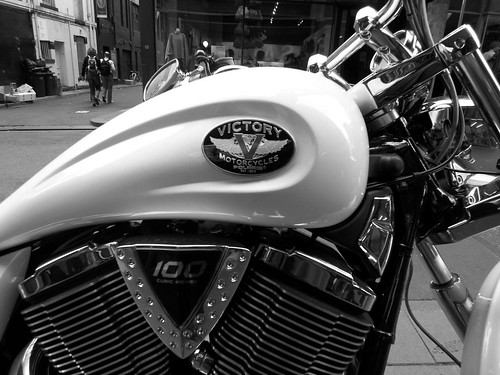
Victory with Kodak V705
Victory
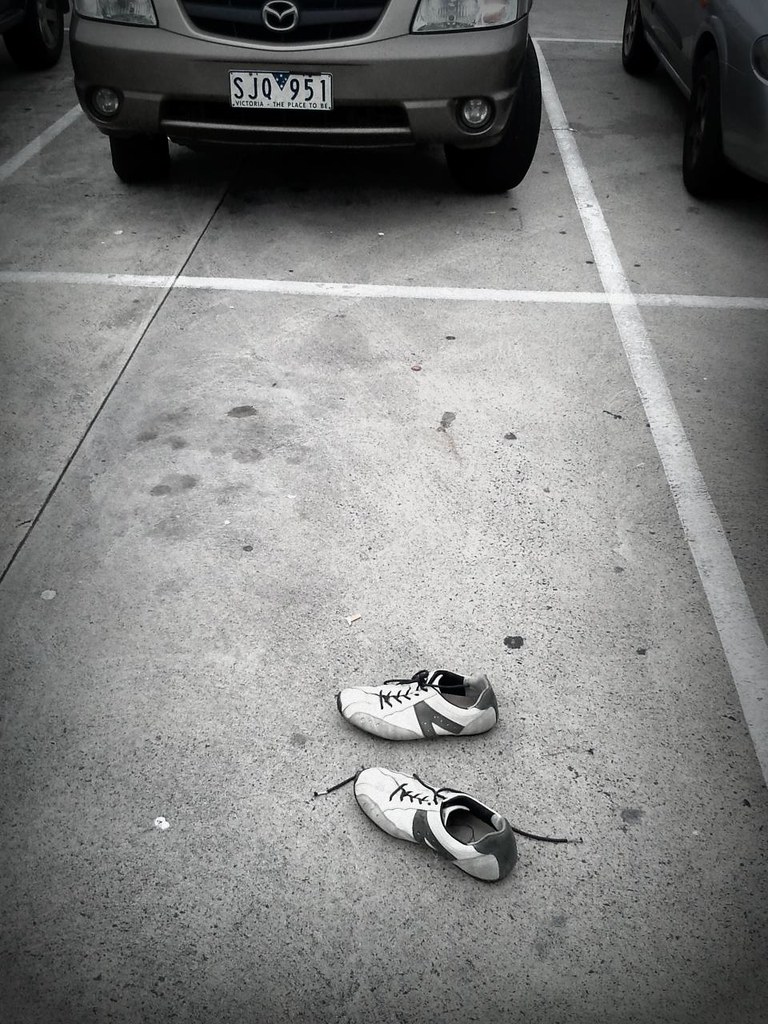
Discarded Shoes with the Samsung Galaxy S
A pair of shoes
Fellini with the Olympus C-750uz
Fellini
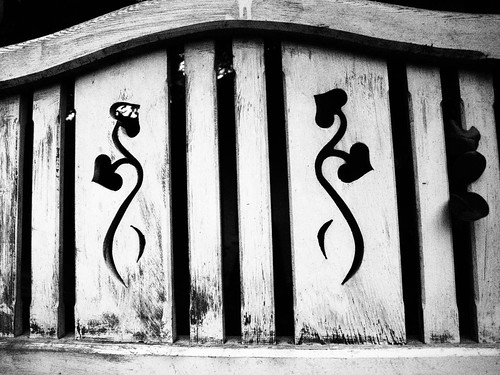
Enchanted with the PEN E-PL1
PEN10798

Sunday, 13 March 2011

Better in Black and White

After a long time away from film, I shot a roll of expired Rollei Retro 100 – it reminded me of Agfapan 100 that I used to shoot in the late 1970s.
But these days, film is messy and expensive – you pay for the roll, you pay for the processing and optionally the scanning and the scanning (for a 35mm film) may have hideous tramlines and dust artifacts.
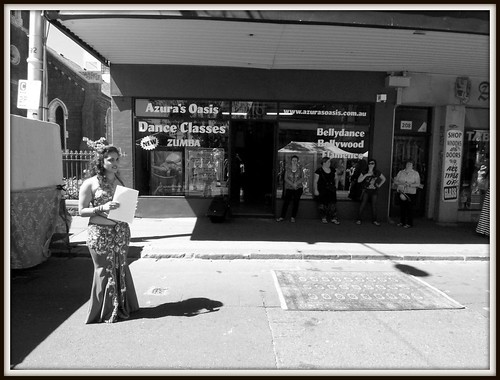
So I thought, how well does Kodak do in their cams with black and white? I mean, born in the camera but lightly adjusted later. Because, black and white to me is about visualisation and visualisation in monochrome is difficult for me these days when colour is prolific. Well, not too bad. Kodak V705.
The Dance
Victory
The Look
And another
del.icio.us Tags: ,,,